Nordic Industry Defends EU ETS: Why Weakening the Carbon Market is "Industrial Suicide"
A powerful counter-offensive from Northern Europe challenges Italy's call to suspend the ETS, reshaping the EUA price outlook.
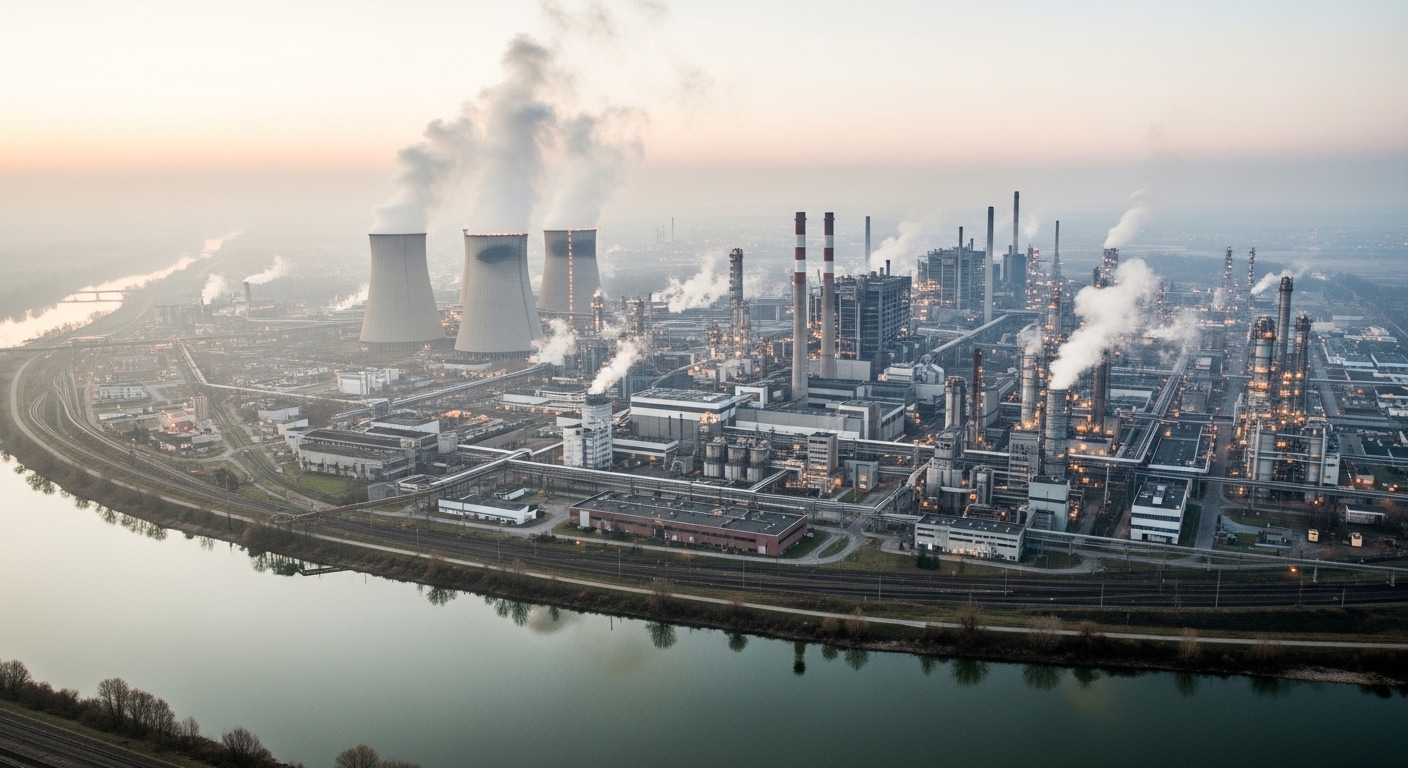
The 23% collapse in EU Allowance (EUA) prices since mid-January—crashing from €91 to a support-testing €70.23 yesterday—tells a story of a market pricing in a political capitulation that may never arrive.
While the "Friends of Industry" coalition, led by Italy and Germany, dominates headlines with demands to suspend or radically overhaul the Emissions Trading System (ETS), a powerful counter-offensive has emerged. As of February 26, 2026, a bloc of Nordic industry heavyweights, supported by the European Commission’s steadfast leadership, is drawing a red line: weakening the carbon market now would be an act of industrial suicide.
For carbon market professionals, the narrative has shifted from "Industry vs. Climate" to "Industry vs. Industry." The outcome of this civil war will determine whether the EUA price floor is made of concrete or glass.
The Nordic Firewall: Competitiveness Through Scarcity
The most significant development in the last 48 hours is not the Italian Minister’s hyperbole about "European ideology," but the formal intervention by the Nordic industry coalition. Representing the business communities of Finland, Sweden, Denmark, and Norway, this bloc submitted a formal letter to Commission President Ursula von der Leyen on February 23, urging the EU to maintain ETS integrity.
Their logic is brutally rational. Unlike the coal-dependent industries in Central Europe or the gas-reliant manufacturers in Italy, Nordic industry has spent a decade electrifying. They view a strong carbon price not as a tax, but as a competitive moat against slower-moving rivals.
The coalition argues that the ETS is "a market-based and technology-neutral policy instrument" essential for financing the transition. Their defense highlights a critical divergence in European industrial strategy:
- The Southern/Central Bloc (Italy, Poland, parts of Germany): Views carbon pricing as a cost to be minimized to survive global competition today.
- The Northern Bloc: Views carbon pricing as the mechanism to monetize their low-carbon investments and secure dominance tomorrow.
For traders, this split is vital. The "Friends of Industry" do not speak for all of Europe. The resistance to watering down the Linear Reduction Factor (LRF) or flooding the market via the Market Stability Reserve (MSR) is structurally entrenched in the Council.
The "Cap and Invest" Pivot: Von der Leyen’s Counter-Offer
European Commission President Ursula von der Leyen has refused to blink. At the Antwerp industry summit and again during yesterday’s ministerial meetings, she deployed a statistic designed to silence the "deindustrialization" narrative: since 2005, ETS emissions have dropped 39% while the covered economy grew 71%.
However, the Commission is not ignoring the pain. The Clean Industrial Deal, formally presented yesterday, represents a strategic pivot from "Cap and Trade" to "Cap and Invest."
Rather than suspending the market—which would crash the value of green assets across the continent—the Commission is proposing to flood the industry with the revenues the market generates. The centerpiece is a new €100 billion Industrial Decarbonisation Bank, with an initial €1 billion pilot auction launching immediately.
The Trade-Off: The Commission is betting it can buy off the "Friends of Industry" with massive revenue recycling (subsidizing CAPEX for low-carbon furnaces and hydrogen) instead of dismantling the OPEX signal (the carbon price). If this "Cap and Invest" framework gains traction in the Q3 negotiations, the bearish pressure on EUAs could evaporate overnight, leaving short positions exposed.
The Battleground: Free Allocation vs. CBAM
The technical heart of this dispute—and the biggest risk factor for compliance buyers—is the scheduled 2034 phase-out of free allowances for sectors covered by the Carbon Border Adjustment Mechanism (CBAM).
BusinessEurope, the pan-European employer association, issued a position paper on February 24 that attempts to thread the needle. They explicitly rejected the Italian call for suspension but proposed a dangerous conditionality: if CBAM is not proven effective by 2027, the phase-out of free allowances must be paused.
This is the "soft weakening" scenario. It doesn't kill the ETS, but it creates a zombie market where scarcity is artificially delayed.
- Current Law: Free allocation vanishes by 2034. Importers pay CBAM.
- Proposed "Friend of Industry" Reform: Keep free allocation and CBAM (likely illegal under WTO rules) or delay the phase-out indefinitely.
If the phase-out is delayed, the supply squeeze anticipated for 2027–2030 loosens significantly. However, Bruegel analysts note that maintaining free allocation has historically failed to foster transformation, effectively subsidizing inefficiency.
Market Analysis: The €70 Floor and the Liquidity Trap
The market reaction has been violent. The Dec-26 contract settling at €72.60 suggests traders are pricing in a high probability of structural intervention.
However, the fundamentals contradict the panic.
- Supply is Fixed (For Now): The cap is still tightening by 4.3% annually. The MSR is still swallowing 400 million allowances per year.
- Gas is Cheap: As Von der Leyen noted, gas prices are forecast to remain low for 3-4 years, meaning the fuel-switching price channel is currently dormant. The carbon price drop is driven by policy sentiment, not energy fundamentals.
- The Short Trap: If the Commission successfully defends the LRF and offers the €100bn investment bank as the compromise, the market will realize that supply is not increasing.
The "So What?" for Compliance Buyers: The current €70 level represents a potential capitulation bottom. If your compliance strategy assumes a political rescue that lowers prices to €40-50, you are betting against the Commission, the Northern bloc, and the legal architecture of the EU Climate Law. A more likely outcome is a volatile rebound once the "suspension" rhetoric is filtered out of the actual legislative proposals in May.
Conclusion: A Clash of Industrial Philosophies
The EU ETS is facing its most severe stress test since 2013. But unlike the crisis of the early 2010s, the market is now the central pillar of a geopolitical industrial strategy. The "Friends of Industry" want to shield incumbent assets; the Commission and the Nordic bloc want to force a transition to lead markets.
Weakening the ETS now would validate the skepticism of global investors regarding Europe's green commitment, potentially accelerating the capital flight the "Friends of Industry" claim they want to stop. As Transport & Environment argues, certainty drives investment, not deregulation.
What to Watch
- May-July 2026 Proposal: The Commission's formal legislative proposal for the ETS review. Watch for changes to the Market Stability Reserve (MSR) intake rate. Any reduction in the MSR’s aggression is a bearish signal; maintaining the status quo is bullish.
- The CBAM Review Trigger: Watch for language linking the 2027 CBAM review to the free allocation schedule. This is the most likely political compromise.
- German Internal Politics: Chancellor Merz is wavering, but his Environment Minister is holding the line. Which voice prevails in Berlin will decide the vote in the Council.
- Auction Behavior: Watch the pilot auction for the Industrial Decarbonisation Bank. High demand for these funds will validate the "Cap and Invest" strategy.
Get carbon market intelligence weekly
Join 8,400+ professionals getting AI-powered carbon market insights every Friday.