EU ETS Restructure: Commission Confirms Shift to 'Investment Tool' for Industry
Brussels counters calls for lower prices with a plan to weaponize carbon revenues via a new Industrial Decarbonisation Bank.
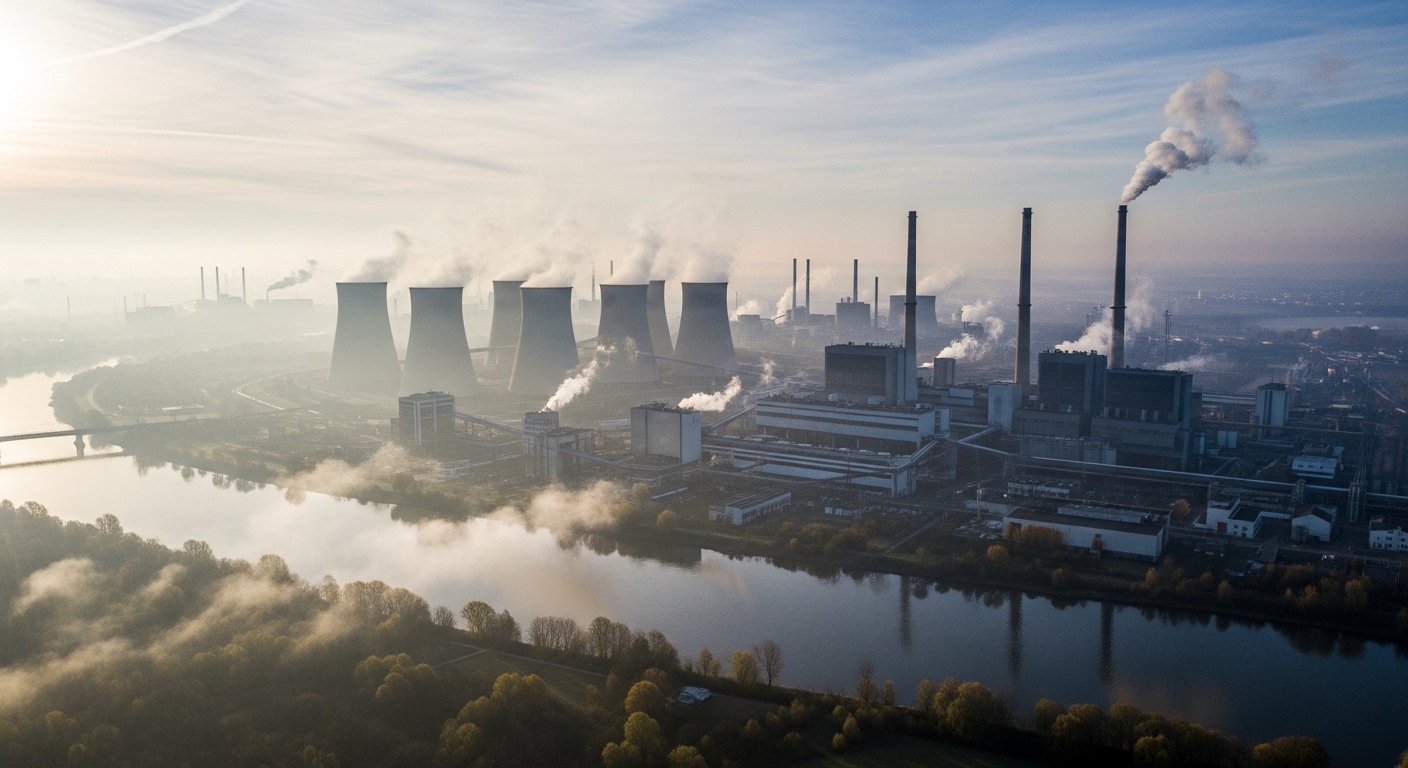
Brussels has responded to the existential crisis facing the European Union Emissions Trading System (ETS) not with a retreat, but with a radical structural evolution. Facing open rebellion from Italy and calls for suspension from chemical heavyweights, the European Commission confirmed on February 26 that it will fundamentally restructure the ETS from a pure regulatory constraint into a comprehensive "investment tool."
This pivot, central to the newly launched Clean Industrial Deal, represents the most significant architectural shift in the market’s history. It effectively acknowledges that a high carbon price alone is insufficient to drive industrial transformation without deindustrialisation. Instead, Brussels intends to weaponize the record revenues generated by the system—€43.6 billion in 2023 alone—to directly finance the capital expenditure (CAPEX) and operational expenditure (OPEX) gaps of the very industries threatening to leave the bloc.
For carbon market professionals, the message is clear: The Commission is betting that the cure for high carbon costs is not lower prices, but massive, directed revenue recycling.
The €100 Billion Gamble: The Industrial Decarbonisation Bank
The centerpiece of this transformation is the proposed Industrial Decarbonisation Bank, designed to mobilize €100 billion in financing for hard-to-abate sectors. This is not merely a rebranding of existing funds; it is a mechanism to solve the "green premium" that currently makes low-carbon steel, cement, and chemicals uncompetitive.
The Bank will utilize Carbon Contracts for Difference (CCfDs) as its primary instrument. This is critical for long-term price forecasting. A CCfD effectively guarantees a strike price for avoided emissions. If the ETS price is below the strike price, the Bank pays the difference to the industrial operator; if the ETS price soars above it, the operator pays the Bank.
Why this matters for the market:
- Floor Price Proxy: Large-scale CCfDs effectively create a soft floor for the carbon price. The Commission has a vested fiscal interest in keeping EUA prices high to minimize payouts from the Bank.
- Supply Removal: By subsidizing the technology switch (e.g., hydrogen-based steel), the Commission is accelerating the destruction of demand for allowances in the long term, while maintaining scarcity in the short term through the Market Stability Reserve (MSR).
The Revenue Paradox: Why Prices Must Stay High
The "investment tool" strategy creates a paradox that directly contradicts the demands from Rome and Prague for lower prices. The entire architecture of the Clean Industrial Deal depends on robust auction revenues.
- The Math: In 2023, ETS auctions generated €43.6 billion. In 2024, despite lower average prices, volumes kept revenues near €38.8 billion.
- The Problem: If political pressure forces a price collapse—like the crash to €71.77 seen earlier this month—the revenue stream dries up. You cannot fund a €100 billion bank with €40 EUAs.
Analysts at SEB Research have noted that while political intervention has capped the upside risk of €150+, the system’s financial obligations now act as a structural support. The Commission is signaling that it will defend the price signal because it is now the primary funding source for EU industrial policy.
Ending the "Black Hole" of National Spending
Perhaps the most aggressive component of the proposal is the move to centralize control over how Member States spend their auction revenues.
Historically, Member State reporting has been opaque. Of the €22.2 billion in reported spending in 2023, only €0.7 billion (3%) was directed specifically toward industrial decarbonisation. The vast majority went to renewable energy subsidies (which are already mature) or general budget lines.
The Commission’s proposal intends to force a "use it or lose it" dynamic, requiring revenues to be recycled directly back into the sectors covered by the ETS. This aligns with the demands of BusinessEurope, which warned that diverting revenues away from covered entities "would fundamentally undermine Europe's ability to keep energy-intensive value chains on the continent."
The Pivot on Free Allocation: From Protection to Conditionality
The transformation into an investment tool signals the death knell for unconditional free allocation. The current system, which handed out billions in free allowances to protect against carbon leakage, is being replaced by the Carbon Border Adjustment Mechanism (CBAM) and conditional support.
Under the new regime:
- CBAM Sectors: Free allocation phases out between 2026 and 2034.
- Conditionality: Remaining free allocation is strictly tied to energy efficiency audits and decarbonisation plans.
This changes the asset management strategy for industrials. Holding free allowances is no longer a passive hedge; it is a decaying asset class. The "investment tool" model suggests that companies will be pushed to monetize their free allocation faster to fund the CAPEX required to access the new Bank’s support.
ETS2 Frontloading: The €3 Billion Pilot
While the heavy industry fight dominates the headlines, the Commission has quietly activated the ETS2 Frontloading Facility. Launched on February 4, 2026, this €3 billion mechanism allows Member States to borrow against future revenues from the new buildings and transport system (ETS2) before it fully comes online in 2027.
This is the proof-of-concept for the wider investment tool strategy: monetize future scarcity to fund present-day transition. It is also a political buffer, designed to shield vulnerable households (via the Social Climate Fund) before the carbon price hits the pump.
Analyst View: The Bull Case in Bearish Clothing
The market reaction to the political chaos of February has been understandably bearish, with prices shedding over 20%. However, the Commission’s "investment tool" confirmation is a latent bullish signal for the medium term (2027-2030).
By tethering the EU’s industrial survival strategy to ETS revenues, Brussels has made the carbon price "too big to fail." A collapse in EUA prices is no longer just an environmental failure; it is now a fiscal failure that would bankrupt the Clean Industrial Deal.
While Italy calls for suspension, the Commission is effectively doubling down. They are betting that by recycling revenues into CAPEX support, they can lower the cost of abatement rather than lowering the cost of carbon.
What to Watch
- July 2026 Commission Proposal: The specific legal text regarding the "earmarking" of Member State auction revenues. If the Commission succeeds in mandating >50% of revenues go to industrial decarbonisation, buy EUAs.
- The "Invalidation Rule": Watch for the debate on ending the MSR invalidation rule in 2027. Table Media reports suggest this could be used to improve liquidity, which would dampen volatility but potentially cap price spikes.
- CCfD Auctions: The first pilot auctions for the Industrial Decarbonisation Bank. High participation rates will signal that the "investment tool" is working; low participation will suggest the strike prices (and thus the underlying EUA price) are too low.
- Chemical Sector Insolvencies: The political pressure is real. If a major German or Italian chemical conglomerate files for insolvency citing energy costs before the Bank is operational, the political firewall protecting the ETS could crumble.
Get carbon market intelligence weekly
Join 8,400+ professionals getting AI-powered carbon market insights every Friday.